Tag Archives: Paleofiction

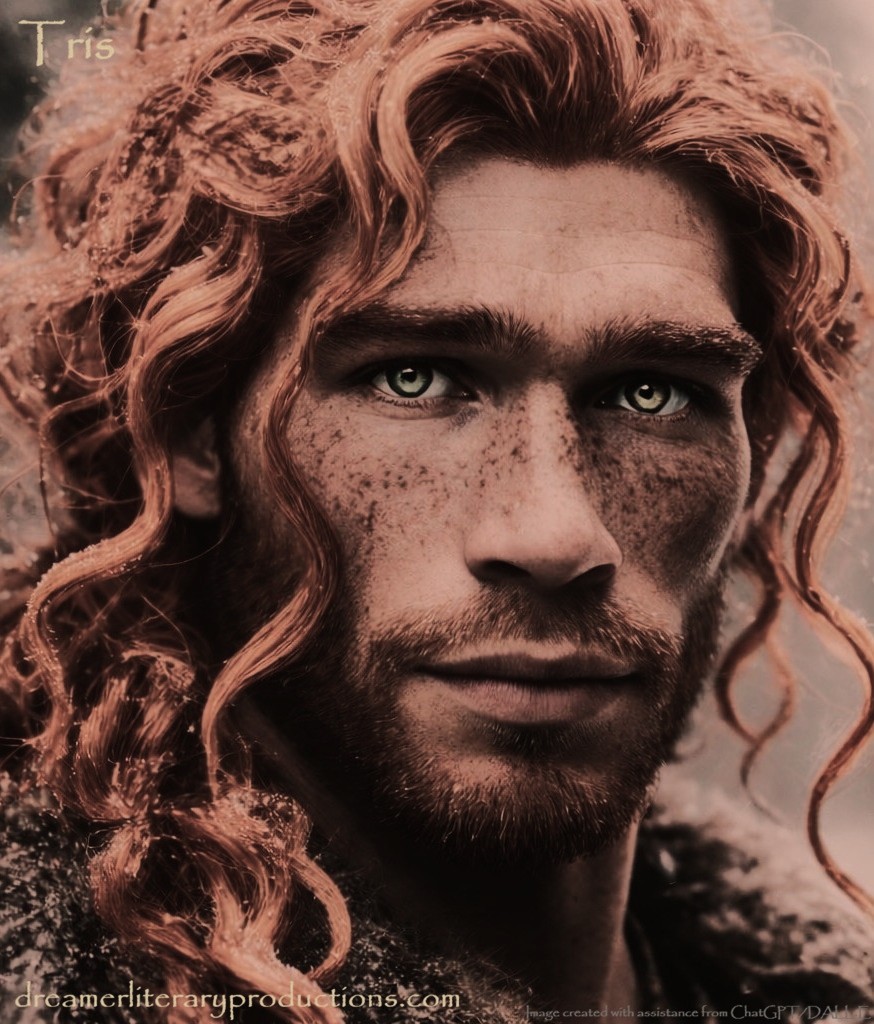
Meet Tris: the title character of Dreamer Books: An Ice Age Saga

At the heart of Dreamer Books is Tris, a young Neanderthal man living in a world where survival is never guaranteed and comfort is often brief. The Ice Age offers little mercy. Winter lingers, food is uncertain, danger is constant, and even the landscape itself can turn hostile without warning. Yet Tris is not a hero in the grand or dramatic sense. He is something quieter, and perhaps more familiar: a man who rises each day determined to do the best he can for the people who depend on him.

From the beginning, I wanted readers to meet him not as a distant prehistoric figure, but as a person. Because Neanderthals are so often imagined as “other,” I chose a first-person viewpoint, allowing Tris to tell his own story in his own way. Through his eyes, readers experience not only the hardships of his world, but also his dry humor, private doubts, loyalty, patience, and occasional frustration—qualities that make him far more recognizable than many might expect from someone living tens of thousands of years ago.

Although he belongs to another age, Tris faces concerns that remain timeless: how to protect family, how to provide in uncertain seasons, how to make difficult choices when there is no perfect answer, and how to keep moving forward when events seem determined to unravel even the best of intentions. He is thoughtful rather than flashy, steady rather than fearless, and often burdened by responsibilities he never asked for but accepts because someone must.

The series itself began in early 2015, when I drafted what would eventually become an eight-book saga. Since then, ongoing discoveries in paleoanthropology and genetics have continued to reshape our understanding of Neanderthals, and I have tried wherever possible to let that evolving science inform the world of the books. Early popular science often suggested Neanderthals were predominantly red-haired, freckled, and green-eyed—a possibility that seemed unusual but not impossible at the time, so Tris and his family were first imagined with that striking coloring. Later research suggested a wider range of appearance, likely closer to the diversity seen in modern European populations, and newer characters introduced beyond his immediate clan reflect that broader understanding.

That same commitment to realism shapes every part of the series: the environment, the animals, the daily tasks of survival, the materials people used, the limits they faced, and the knowledge they possessed. These are prehistoric novels, but they are built as closely as possible around what archaeology, paleoclimate research, and anthropology suggest life may truly have been like during the Ice Age.

And then there are the dreams, which gave the series its name. Each book opens with a dream that quietly sets the stage for events to come and closes with another that offers a glimpse of what may lie ahead. Within the story world, Dreamers appear only once every few generations and are regarded with special attention by those around them. Tris, however, remains unconvinced. He is practical by nature, skeptical of anything that cannot be tested against daily reality. To him, dreams may be no more than a restless mind at work—though he cannot entirely ignore how often they seem to linger.

Over the years, one of the most rewarding parts of writing Tris has been hearing from readers who recognize something deeply human in him. Men often tell me they understand his instinct to shoulder burdens quietly and keep going because others rely on him. Women frequently write to say they admire his steadiness, his strength, and his inherent kindness.

At his core, Tris is not meant to be extraordinary because he is larger than life, but because he endures life as it comes: thoughtfully and with stubborn determination. In a harsh prehistoric world shaped by ice, hunger, uncertainty, and change, he remains what many of the best heroes are—someone who simply refuses to stop trying.
Discover Dreamer Books: An Ice Age Saga on Patreon! Enjoy twice-weekly podcasts packed with exclusive extras like author insights, original book art, and fascinating deep dives into the science and history behind the story. Tune in every Saturday for Tris's engaging chapter-by-chapter narrations, and join us on Tuesdays for "Author Musings," where the author reflects on the previous chapter. Don't miss this immersive journey into the world of Dreamer Books!


 

Total Page Visits: 7706

Excerpt from The Cave of Bones

Based around the archaeological discoveries found in a Belgium cave, The Dreamer IV – The Cave of Bones continues the eight-book prehistoric fiction series entitled Dreamer Books: An Ice Age Saga. It is a chronicle from the distant past, when the European continent was yet untamed, and humans fought to endure within a savage environment.

In this setting, a Neanderthal man named Tris narrates his story – often told in a manner that is thoughtful, and sometimes rather droll. His life’s journey is one filled with harrowing adventure and a relentless struggle to survive, but it is also a timeless, very human tale that tells of tested bonds of family and fellowship.

At the outset, Tris is a wide-eyed innocent who has lived a very sheltered existence. His most pressing concerns are presented by confrontations with wildlife and supporting the sustenance of the group. As time goes on and new tribes settle on lands once exclusively inhabited by the Neanderthal, he and his clan must adapt to a number of social changes and challenges. (After viewing the video, scroll down to see what happens next!)

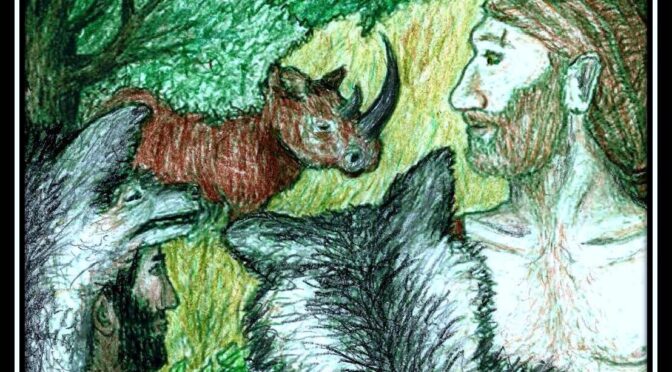
(Video includes an AI-produced image of Tris.)

The story continues…

Total Page Visits: 2507

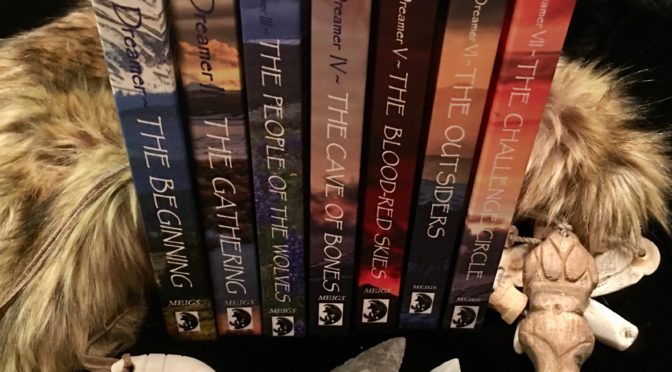
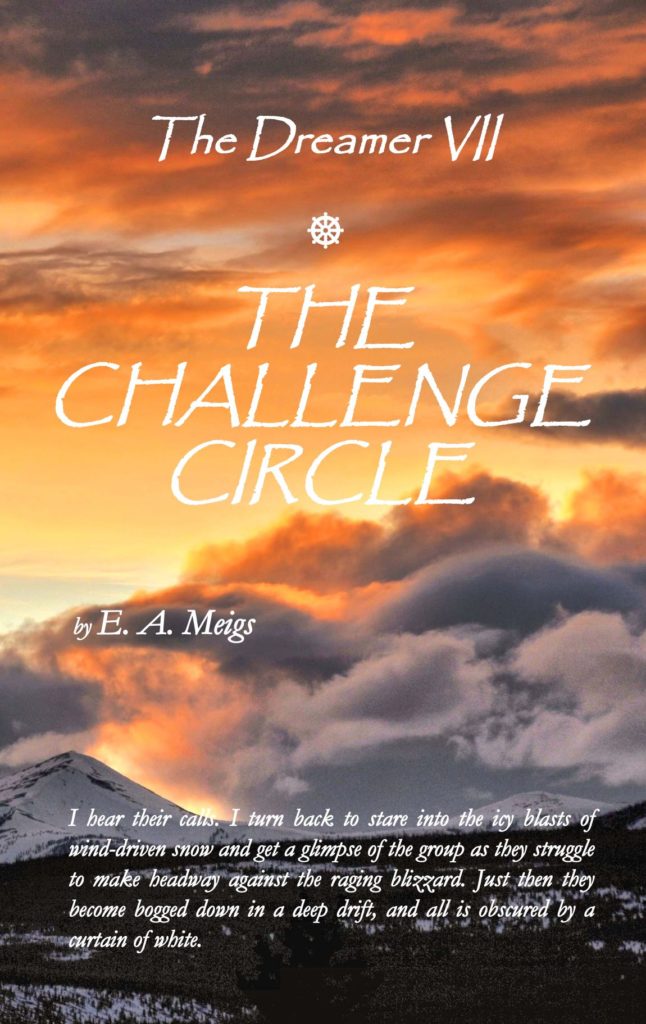
Book 7 Released!

Dreamer Literary Productions is pleased to announce that The Dreamer VII ~ The Challenge Circle is now officially released, in Ebook, paperback, and hardcover formats!

The epic Ice Age adventure continues with this latest installment. Did you ever wonder what life was like for those who walked the Earth before us? Dreamer Books opens a literary portal to life during the last Glacial Maximum, what with all its challenges and drama, while simultaneously instilling an enduring sense of wonder at the resiliency and resourcefulness of our ancestors. The ongoing story celebrates the human spirit, and illustrates however much the settings may differ, people have little changed over the eons.

The next and final book in the series, The Dreamer VIII ~ The Talking Stones is due to be released in the summer of 2023.

Find Dreamer Books: An Ice Age Saga here!

Reader Reviews here!

And more about “The Birth of a Book Series” here!

(Image credits: book cover photo by Paula Kugerud Photography, Venus figurine pendant and lithics by Neanderthal Joe. Header photo and blog photo by E. A. Meigs)

Total Page Visits: 20494


A Child of Two Worlds

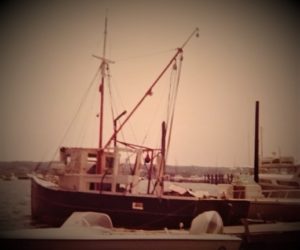
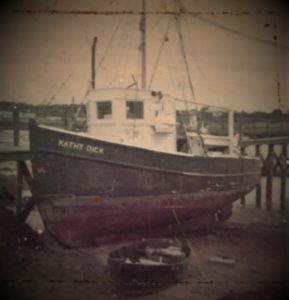
Our scallop boat, referred to as a dragger, the Kathy Dick.

It’s 4AM and I’m standing on a dock. Harborside lights illuminate the crystal-clear water, where I can see small bait fish flit about, while a crab scuttles to hide in the shadows.  At that moment, I am less interested in marine life than I am the depth of the water.  I know we need at least a half-tide to make it over the creeping sandbars that continually infiltrate the channel.  Many a morning was spent peering into the depths, awaiting the moment when we could depart.

My Dad was a commercial sea scallop fisherman.  His boat was a thirty-foot long wooden dragger, built in 1931.  She was a modest working vessel, with the well-worn, slightly dingy look that typified most fishing boats.  A symphony of aromas accompanied her wherever she went: a pungent mixture of old fish, diesel exhaust, and paint.  Her pilot house was outfitted with a compass, fathometer, VHF radio, and wind-up clock.  Down below and forward, an old-fashioned cast iron stove, fold-down table/pantry, and a berth made for a cozy little cabin.  A large coffee can served as the head (toilet) for anyone who did not wish to make their deposit over the gun’ale.

I accompanied Dad on these outings whenever possible.  As a kid raised in a semi-famous “Sea Captain Town”, it was almost impossible to avoid at least some familiarity with the nautical world, but my childhood was well-steeped in it.  And I was hooked from the start.  I loved everything to do with boats and being on the water.  Dad usually fished alone unless accompanied by a family member or friend, so when I was first invited to go out scalloping at age eight (after pleading to be allowed to go for some time), I was thrilled.  The hours were long, but as a “day boat” that returned to harbor by nightfall, the trips were less onerous than those of bigger off-shore boats.

We left as soon as the tide permitted and I made bacon and eggs for our breakfast while we steamed to the grounds.  The stove was probably intended to be fueled with wood, but as I recall, we most often used cans of ethanol gel for cooking.  The stovetop had a clamp system called fiddles that kept pots and pans from suddenly levitating or taking flight across the cabin while we were underway.  The fiddles also allowed the cook to use both hands when tending food, and sometimes, to brace against the carnival ride-like motion of the boat.

Painting the dragger’s bottom before the tide comes in!

Later, fortified by a hearty breakfast and still plunging along, we washed the dishes.  The plates and silverware were washed in the shucking box, but most of our dinnerware had holes in it, so the skillet, ironstone coffee mugs, and spatula had a line run through the holes and after being tied-off, were thrown over the side to be scrubbed as we forged ahead to our destination. Following a period of being subjected to a saltwater-and-sand scouring, we hauled back on the rope and the sparkling-clean items were dried and stowed.

Sea scalloping involves towing a drag across the ocean floor in strategic areas.  With luck, you will have found a few good scallop beds, and if you’re careful not to overfish them, you can alternate between these beds indefinitely.  After the drag comes up, its contents are dumped onto the deck and the pile is culled for scallops, which are then shucked while the drag is returned to the water.  This cycle of drag down/drag up goes on all day, but we must stop in time to steam back to the harbor to catch the evening tide.

Days worked on the water are unlike any day on land.  It is almost as though you have been transported to another world.  Time moves at its own speed, measured by the cadence of the waves, and the duration of each tow along the seafloor.  On pleasant days, the breeze whispers softly in rigging and the moist salt air refreshes the skin.  That said, there were many bitter cold days when the biting wind caused what we called “wind burn” and I envied my father his beard!

I was scalloping with Dad on a winter’s day when the snow began to fall fast and thick.  The seas were relatively calm, but it was quite cold.  As mentioned before, Dad had a full beard, and it was coated with frost, his mustache edged with icicles.  The snow stuck to us as we worked, until we more closely resembled a pair of Yetis than a couple of humans.  I may have been twelve or thirteen years old at the time, but I still vividly recall how thoroughly chilled I was, especially considering it was difficult to do that kind of work while wearing gloves.  I knew Dad had to be cold as well.

“Dad,” I said, having had an epiphany, “Do you want a cup of hot chocolate?”

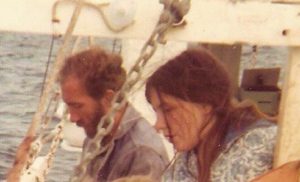
Dad and me (age 8), shucking scallops.

He answered with a decisive affirmative, so I was down below in a flash to boil water.  These days, when I make hot chocolate, I cook it on the stovetop from individual ingredients.  This was just instant cocoa, but the ironstone mugs made wonderful hand-warmers and it felt so luxurious to sip the piping-hot beverage as I thawed my fingers.  There’s a great sense of camaraderie that comes from standing together on a gently heaving deck, listening to the engine labor as the boat leads the drag on yet another pass, silently enjoying a simple cup of cocoa.  The drag would be hauled up shortly, but this few minutes’ respite was priceless as snow swirled around us; no one else was in sight – we were just two people on a little boat as it plowed across a vast expanse of green water.

Some part of me will always be a fisherman’s daughter: the kid who drew pictures of fishing boats in art class, while the other kids drew horses, cars, and houses; the kid who went to school with dried scallop guts and blood on my oil skins (raincoat).

I haven’t worked in the fishing industry for many years now, but it was an important part of my upbringing and it made my living for some decades.  I am past the point in life where I would want to return to that occupation, but I still wax nostalgic on occasion for the smell of the ocean and freedom of riding the waves.  I hope I have passed on this affinity to my children, who were exposed the ocean and boats literally from the time they were babies.

It was my fate that I should be drawn to two very different worlds: the call of the sea and the grounding effect of living a terrestrial life.  And I harbor a deep and abiding love for both.

This plaque was mounted on a bulkhead in the dragger’s forward cabin.

Commercial fishing and working in boat yards has also influenced my writing, especially as it pertains to my current book series.  Not only because I worked almost exclusively with men, but because of the insights gained from working with men who labored in one of the most physical and dangerous occupations known.  Surely, our early ancestors would have shared at least some of their views on the pursuit of prey (whether fish, fowl, or mammal) and the risks involved with the less-than certain lifestyle, and empathized with the discomforts that come with exposure to the elements, no matter what form they may take.  All such challenges are timeless.

My nephew wrote this about Dad: I can remember many times seeing him hanging upside down into the engine compartment battling with some rusty thing or other that wasn't cooperating, monkey climbing partway up the mast or rigging to untangle some unfortunate and uncooperative line that got tangled...

Embark on an Ice Age Adventure! Find Dreamer Books Here!

Read more: “The Birth of a Book Series”.


Total Page Visits: 6909